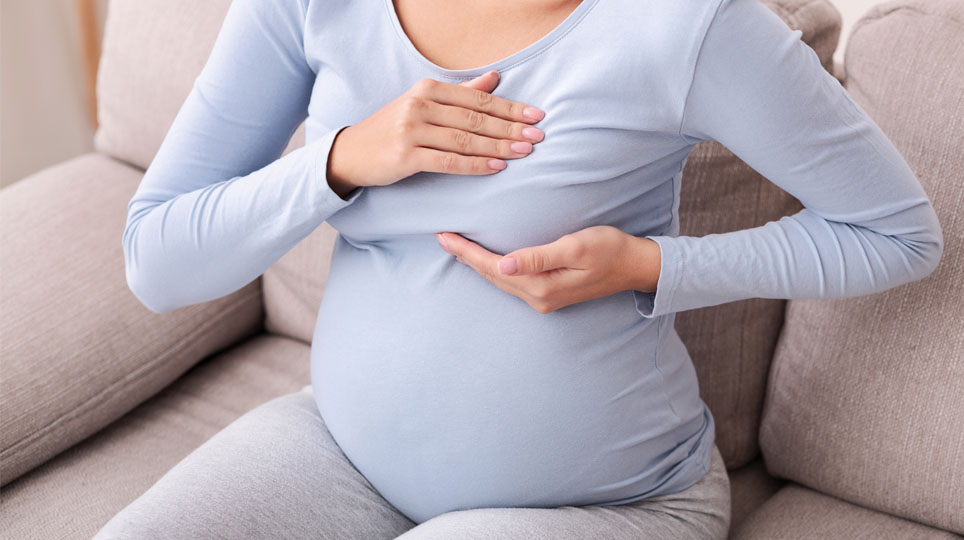
Pregnancy brings about many physical and hormonal changes in the body. Hormones like estrogen, progesterone, and prolactin increase causing tissues to grow, blood flow to rise, and fluids to shift. These changes can lead to the formation of lumps, bumps, swellings, and masses. Keep in mind that most lumps found during pregnancy are harmless or represent normal body changes. However, it’s crucial to understand what kinds of lumps appear why they develop, and when a lump needs to be checked out.
This comprehensive overview outlines the most common types of lumps encountered in pregnancy, categorized by body region and cause.
1. Breast Lumps
Breast lumps often scare pregnant women. Pregnancy hormones affect breasts causing rapid changes to prepare for breastfeeding. These changes include Glandular tissue growth, Duct expansion, Increased blood flow, Fluid retention. These changes make breasts feel fuller and lumpier overall. Yet distinct lumps can appear too. Some of these lumps are:
a. Fibroadenomas
Fibroadenomas are harmless breast lumps, made of both fibrous and glandular tissue. Lots of women have them even before they get pregnant. Once hormones kick in, though, these lumps in pregnancy sometimes get bigger. They usually feel smooth and almost rubbery, and you can move them around under your skin. Most of the time, they don’t hurt at all. When breasts swell up during pregnancy, these lumps in pregnancy can become more noticeable.
b. Lactational Adenomas
These are pregnancy-associated benign breast masses that form as milk-producing glands develop. They often feel soft or slightly firm and are typically movable under the skin. They are harmless and often shrink after pregnancy or breastfeeding.
c. Galactoceles
A galactocele is essentially a milk-filled cyst, most commonly occurring in late pregnancy or postpartum. It forms when a milk duct becomes blocked. Galactoceles feel smooth, round, and often painless. They may change size depending on feeding or pumping.
d. Cysts (Simple or Complex)
Hormonal shifts can cause fluid-filled cysts in the breast. Most of the time, they’re nothing to worry about they come and go, especially during pregnancy. Sometimes they feel a little sore, usually right before feeding or as your breasts start to grow.
e. Blocked Milk Ducts
Later in pregnancy and after birth, milk ducts can get clogged. These lumps feel firm and tender, but honestly, a warm compress or gentle massage usually does the trick.
f. Pregnancy-Associated Breast Cancer (Rare)
Although very uncommon, breast cancer can occur during pregnancy. Any lump that is hard, fixed, irregular, or persistent should be evaluated. Because breasts become denser in pregnancy, distinguishing cancerous lumps can be more difficult, That’s why it matters to have any unusual lump looked at right away.
2. Skin Lumps
Hormonal changes, weight gain, and friction can cause various skin lumps to develop or become more noticeable during pregnancy.
a. Skin Tags
These are small, soft, benign growths that usually develop in neck folds, the underarms, below the breasts, or in the groin. The development of these is linked to increased hormones and skin friction. They are harmless and can be removed if they are bothersome.
b. Cysts (Epidermoid or Sebaceous)
Cysts form when skin cells or oils build up beneath the skin. They feel like round, firm bumps, and can occur anywhere. Most of them will remain painless unless infected.
c. Lipomas
Lipomas are soft, slow-growing fatty lumps that sit beneath the skin. They usually existed prior but may become more noticeable with body changes. They are benign and painless.
d. Dermatofibromas
Small, firm nodules often caused by minor skin trauma. They are harmless and usually need no treatment.
3. Groin, Vulvar, and Vaginal Lumps
This region undergoes major changes due to increased blood flow, fluid retention, and pressure from the growing uterus.
a. Enlarged Lymph Nodes
Infections, irritation from shaving, ingrown hairs, or sexually transmitted infections can cause lymph nodes in the groin to swell. These lumps feel firm and may be tender.
b. Bartholin Gland Cyst
Bartholin glands, located at the vaginal opening, can become blocked and form a cyst. These lumps are typically smooth and located on one side of the vaginal entrance. If infected, they become painful abscesses.
c. Vulvar Varicosities
Pregnancy increases blood volume and pressure on pelvic veins, leading to varicose veins in the vulva. These appear as soft, bluish or purplish bulges and may cause discomfort, especially after prolonged standing.
d. Hernias in the Groin
Increased abdominal pressure may contribute to inguinal hernias. These present as bulges in the groin that may become more prominent when standing or coughing.
4. Abdominal and Pelvic Lumps
Not all abdominal lumps are visible from the outside; some are internal but felt through examination or imaging.
a. Umbilical Hernia
As the abdomen expands and pressure increases, the belly button may protrude. An umbilical hernia creates a soft bulge around the navel. It is generally harmless unless painful or trapped.
b. Diastasis Recti
Though not a “true” lump, separation of abdominal muscles can cause a midline bulge, especially when sitting up or straining. This is very common and usually resolves postpartum.
c. Uterine Fibroids
Fibroids are benign tumors of the uterus. Many women have them prior to pregnancy, but they may grow due to increased blood supply and hormones. They can feel like firm masses and sometimes cause localized pain.
d. Ovarian Cysts
Functional cysts, dermoid cysts, or other ovarian masses may be detected during pregnancy. Some are harmless, while others require monitoring.
5. Armpit (Axillary) Lumps
The axillary region is closely connected to breast tissue, and pregnancy can cause noticeable changes.
a. Accessory Breast Tissue
Some women have extra breast tissue in the armpit (a normal anatomical variant). During pregnancy, this tissue can swell, becoming tender or forming a lump.
b. Blocked Sweat Glands
Heat, perspiration, and hormonal changes can clog sweat glands, forming painful lumps.
c. Enlarged Lymph Nodes
Infections, irritation, or inflammation can cause lymph node swelling. They often feel firm or rubbery.
6. Lumps Caused by Circulatory Changes
Pregnancy increases blood volume by up to 50%. This can lead to:
a. Varicose Veins
These can appear not only on the legs but also:
- on the vulva
- around the anus (hemorrhoids)
- in the groin
These lumps can feel soft, rope-like, or tender.
b. Hemorrhoids
Hemorrhoids are swollen veins in the rectal area. They may appear as soft lumps around the anus and are common due to increased pelvic pressure and constipation.
When to Seek Medical Attention for Lumps in Pregnancy
1.The lump is hard, fixed, or not movable A lump that feels firm, solid, or stuck in place under the skin is more worrying than one that feels soft or rubbery.
2. The lump is rapidly growing If a lump grows rapidly, suddenly appears large, continues growing over weeks….it should be evaluated.
3. The lump is painful, red, or warm. These signs suggest infection or inflammation, which might require treatment.
4.You have fever, chills, or other signs of illness. This could indicate an infected cyst, abscess, or some other type of inflammation.
5. The lump does not improve after 2-4 weeks. Even if it seems minor, anything persistent should be checked, especially in the breasts.
6.The lump has irregular borders or an unusual shape. Lumps that are uneven, bumpy, or asymmetrical should be checked by a healthcare provider.
7.There is unusual nipple discharge. Seek care if the discharge is bloody, green, foul smelling, or coming from only one nipple not milk.
8. The lump is in the breast and is different from the usual pregnancy changes. Pregnancy can make breasts naturally lumpy, but a single distinct lump that feels out of place should be evaluated.
9. The lump is in the groin and painful or growing. Some possible causes of painful groin lumps, like an infected lymph node, Bartholin abscess, or hernia, require immediate medical attention.
10. The lump is in the vulva and you see swelling, bluish color, or severe pain. This may mean varicose veins, infection, cysts, trauma. Some conditions may need treatment or monitoring.
11.The lump is abdominal and painful, firm, or discolored. It might be a hernia or something else wrong with the wall of the abdomen, but it shouldn’t be ignored.
12.The lump is accompanied by changes in the skin of the breast. Seek care if you notice dimpling, thickening of the skin, rash that does not go away, inversion of a nipple that happens all of a sudden. These are warning signs that may mean you have complications of the breast.
13. You’re simply unsure or concerned Even if the lump doesn’t have obvious warning signs, it’s always appropriate to have your provider evaluate it. Pregnancy changes make self-assessment challenging, and reassurance is valuable.
Conclusion
Lumps in pregnancy are common and usually harmless, resulting from hormonal changes, increased blood flow, tissue growth, or mechanical pressure from the expanding uterus. Understanding the types of lumps that can occur helps reduce anxiety and encourages timely evaluation of any unusual findings. While most lumps are benign such as fibroadenomas, cysts, varicose veins, or hernias it’s always best to consult a healthcare provider to ensure proper diagnosis and peace of mind.
FAQ
1.When should I worry about a breast lump?
However, you need to consult your doctor if your lump is hard, irregular in shape, fixed (does not change position when pressed), and continues to grow. Other signs of breast cancer include changes to your skin such as dimpling, nipple discharge usually with blood or changes to the skin color that do not normalize.
Q2.Are breast lumps in pregnancy always cancer?
No. In fact, 80% of breast lump occurrences in pregnant women are benign. The incidence of cancer among pregnant women is 1 in 3,000.
Q3.How are these lumps treated?
There are also some benign lumps that, like galactoceles, sometimes resolve spontaneously after birth or cessation of breast-feeding. For clogged ducts, measures that can be taken include the use of warm compresses, massage, and nursing.
Q4.Is it safe to get imaging for a breast lump while pregnant?
Yes. Ultrasound is safe and is the first method of choice. A safe mammogram using an abdominal lead apron is also available if required.
Q5.Can I get lumps in my armpit?
Yes, and the axillary accessory breast tissue can become engorged, causing lumps in the armpits as you prepare for the production of milk.
Q6.What about lumps in the stomach area?
As your belly is growing, it is possible to sense other lumps. If one notices a hard, painless lump that develops in the lower abdomen, especially during night time, it is most likely to be a physiological contracting of the uterus.
Q7.Can skin lumps appear?
Yes, these hormonal changes can induce the formation of new skin tags or benign red-colored blood vessels called hemangiomas, often present on the neck or under the arms.