Sperm quality, of course, starts with sperm health as a basic foundation to male fertility, but this does not only pertain to conception, to actually becoming pregnant, and to having a healthy child but to all aspects of child health as well. Sperm health, as a concern that was considered to be an individual issue, can actually benefit from the huge contributions of the partners as shown to really impact positively upon lifestyle factors and preferences. It would really be very beneficial if sperm health can really be a collaborative effort.
Understanding Sperm Health
Healthy sperm can be described by many factors, which include sperm concentration or number, motility or vigor, morphology or shape, and DNA quality. These can be affected by one’s genetic makeup, age, surroundings, lifestyle, or existing health. BUT the good news is that sperm production is an ongoing process that takes 70-90 days to complete. This means that “all the efforts made today will make a huge difference in just a few months,” with “a partner playing an important part in this process.”
Nutrition: Eating for Reproductive Health
The best method to enhance sperm quality is to follow a balanced diet. There are also ways to complement this diet with assistance from one’s partner, and this is to first start with healthy foods. The food required in a diet to enhance sperm quality are vegetables, fruits, whole grains, beans, nuts, and protein rich food.
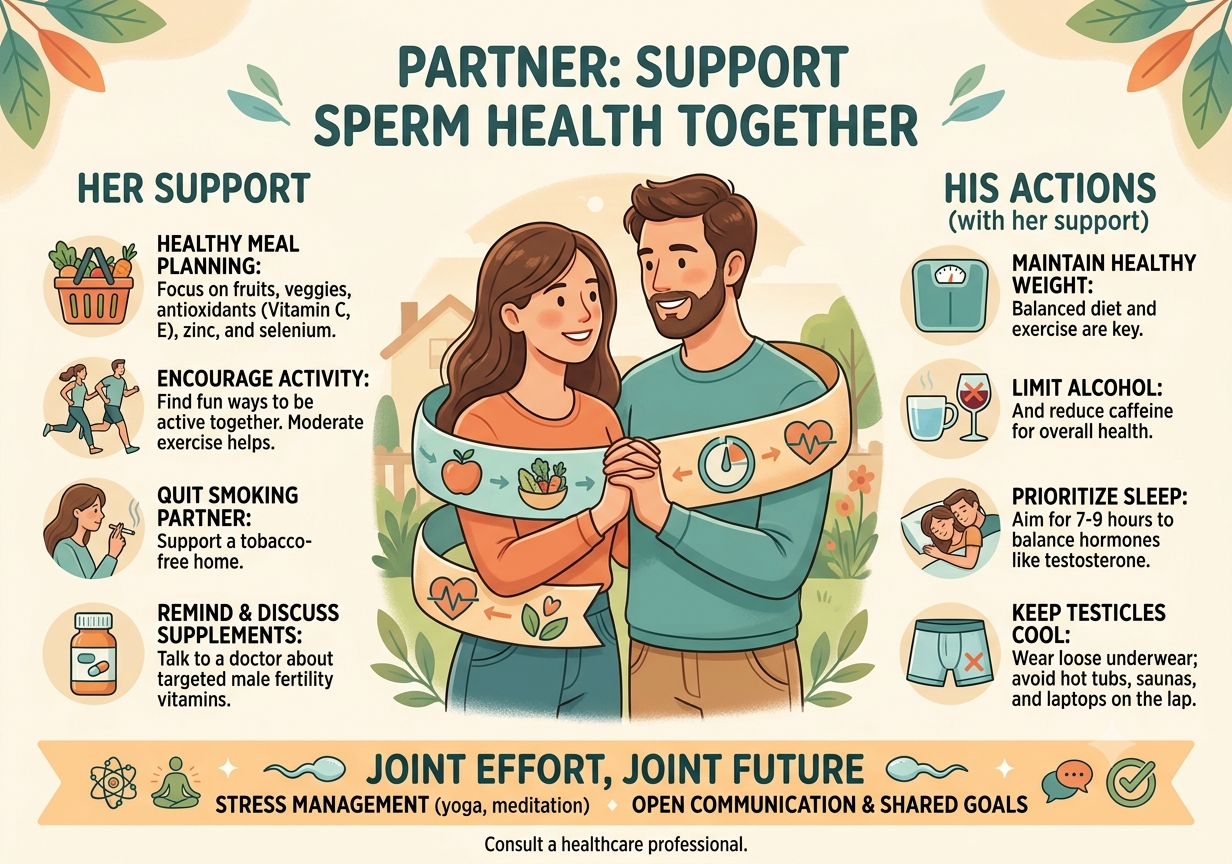
The essential nutrients that have a role in sperm function are zinc, selenium, folate, omega-3 fatty acids, and also antioxidant vitamins C and E. Therefore, nutrition has a positive role in the processes of spermiogenesis/protection against damage/improvement of motility. They may promote their partners to adopt healthy eating habits through collaborative culinary sessions to facilitate healthy food availability through decreased usage of ultra-processed foods that are rich in sugar and trans fatty acids. Such nutrients have previously been recognized to contribute to the quality of poor-quality seminal fluid.
Hydration is important too. Drinking lots of water is a great indicator of metabolic function and semen volume. Getting this kick-started as a group goal and having water bottles accessible will probably make this one of the easy things that work.
Lifestyle Habits: Building Healthy Routines Together
Several lifestyle factors strongly affect sperm health and partners can play a key role in shaping daily routines.
Physical exercises are also highly recommended and the most significant thing, in any case, is the routine which includes appropriate physical exercises like taking walks, swimming, or weight training. It is highly beneficial in keeping the hormonal balance, as well as the cardiovascular system. Many individuals have found it highly beneficial and convenient to maintain their physical exercises and also their relationships. Too much training without proper rest may also have an effect on the sperms, hence the appropriate balance has to be achieved.
Another foundation stone is the matter of sleep. Inadequate sleep or improper sleep practices can affect the levels of male hormones and the production of sperm. The partners can assist by promoting early bed times and discouraging the use of electronic devices in the late evening hours.
Weight management is also a concern. Having extra body fat has been known to affect the level of certain hormones, raise scrotal temperature, and potentially impact sperm. Being a team working toward a weight goal, without placing blame or guilt, reminds both of you that it’s about being healthy, not what you look like.
Reducing Harmful Exposures
There exist in today’s modern life materials that can possibly have negative health effects on the sperm. Both the partners could cooperate to avoid such hazards.
It is widely regarded that cigarette smoking, and indeed e-cigarettes, have one of the most significant effects on the number, motility, and integrity of sperm.Quitting smoking has been referred to as one of the most efficient ways to boost fertility.
Alcohol taken to reduces the level of testosterone in the body and impacts sperm production negatively. Couples can help each other socially by organizing non-alcohol functions.
Recreational drugs like anabolic steroids and marijuana may compromise the quality of sperms and even the hormonal regulation. Open communication sans judgment may be vital where such drugs form a part of life.
Exposure also plays an essential role. High-temperature exposure-frequent hot tubs or sauna baths, tight garments, and using a laptop on the lap-have also been suggested to have an impact on testicular temperature and sperm production. Also, advice by a sexual partner to cool down or place laptops on a desk may help improve sperm production.
Stress, Mental Health, and Emotional Support
Chronic stress affects sex hormones that are involved in the maturation and secretion of sperm as well as sexual functions. There are many issues related to fertility that can be a source of high levels of stress related to low sexual intimacy and guilt.
The significant shock absorber for the stresses may be the partner. It may involve emotion validation, communication concerning the concerns, and no blaming. The couple may use mindfulness, yoga, Deep Breathing, or even downtime together to reduce the stress.
At some point, when dealing with stress, anxiety, or depression, one may require professional assistance. This in itself requires some level of strength, as rather than being weak, one requires help. Therapy, whether individual or couples, can bring about enormous transformations in one’s emotional as well as their reproductive well-being.
Sexual Health and Timing
Frequent ejaculation can induce sperm turnover, and this can improve sperm quality byReplacing damaged sperm from older ejaculates. Partners can help each other throughOpen communication about sexual activity and desires, especially if conception is being sought.
While ovulation calendar tracking might prove useful, the emphasis on “fertile windows” might actually increase levels of anxiety. More a question of balance between planning and feelings, really.
The importance of safe sex behavior also comes into play, since conditions resulting from sex can influence fertility. Partners can communicate their test results, ailments, and medicines without anything negative being linked to the conversation.
Medical Care and Shared Responsibility
As the United States Medical attention may also be pro-fertility. Partners can be encouraged to attend hospital visits or consult doctors for their conditions, especially diabetes or high blood pressure. Some medications hinder the production of sperm. One should share fertility ambitions with doctors.
In matters of fertility concern, a “we” approach in evaluation can significantly reduce feelings of isolation. Seeing each other at times of evaluation appointment, getting news about the evaluation test result, and shared decision-making can do much in sustaining the relationship of partnership and mutual respect.
Patience, Perspective, and Partnership
The treatments regarding abnormal sperms involve less work involving one particular change, but all efforts focus on maintaining the positive behaviors. The couple needs to understand that there are too many factors related to fertility that cannot be controlled by anyone. When it comes to these cases, negativity results in calamity, while collaboration and understanding work like magic. “Small wins can add up over time, and we can begin to see that we are making healthier choices by eating better, sleeping more soundly, and cutting our stress levels.” Perhaps a little longer than expected to get pregnant, but this lifestyle is amazing for our physical and relational wellness.
Final Thoughts
First Law Sperm quality is no ‘male problem’ either. This can certainly be a problem within the community, because it has a lot to do with the health of the relationship also. A joint approach together by the couple itself, through food and methods for a healthy lifestyle, as well as methods for stress and communication, creates the conditions for conception.